Math · AP
Calculus & Probability
Surfaces, tangents, Riemann sums and dice you can actually roll.
Also on your phone · Calculus & Probability Lab
The course
7 worlds · 60 lessons

World 1 · Functions & Limits
FREEFrom graphs to the edge of calculus- 01What is a function?Inputs, outputs and rules · 6 min
- 02Families of functionsLines, parabolas, waves · 7 min
- 03Slope of a lineRise over run · 6 min
- 04What is a limit?Closing in on a value · 8 min
- 05One-sided limitsApproaching from left and right · 7 min
- 06ContinuityNo holes, jumps or breaks · 7 min
- 07Average rate of changeThe secant line · 7 min
- 08Instantaneous rateWhen the secant becomes the tangent · 8 min
- 09Exponentials & logsGrowth and its inverse · 8 min
- 10Shifting & scalingTransforming any graph · 6 min
- 11Piecewise functionsDifferent rules on different intervals · 6 min
- 12Checkpoint — limitsPull it together · 7 min
World 2 · Derivative Lab
PRORules, tangents and 3D surfaces- 01The derivative as slopef'(x) at every point · 7 minPRO
- 02The power ruleDifferentiate polynomials fast · 7 minPRO
- 03Tangents on a curveSee the slope live · 6 minPRO
- 04The product ruleDifferentiating f·g · 7 minPRO
- 05The quotient ruleDifferentiating f / g · 7 minPRO
- 06The chain ruleFunctions inside functions · 8 minPRO
- 07Higher derivativesAcceleration & concavity · 7 minPRO
- 08Tangent planes in 3DPartial derivatives · 8 minPRO
- 09Critical pointsMaxima, minima, saddles · 7 minPRO
- 10Related ratesLinked changing quantities · 8 minPRO
- 11OptimizationBest possible value · 8 minPRO
- 12The Mean Value TheoremAverage meets instantaneous · 7 minPRO
- 13Checkpoint — derivativesThe full toolbox · 6 minPRO

World 3 · Integral Lab
PROArea, accumulation and the FTC- 01Area under a curveA new kind of question · 7 minPRO
- 02Riemann sumsRectangles that converge · 8 minPRO
- 03The definite integralThe limit of the sum · 7 minPRO
- 04AntiderivativesUndoing the derivative · 7 minPRO
- 05The Fundamental TheoremDerivatives meet integrals · 8 minPRO
- 06Net changeIntegrating a rate · 7 minPRO
- 07Average valueThe mean height of a curve · 6 minPRO
- 08Area between curvesTop minus bottom · 7 minPRO
- 09Volumes of revolutionSpinning a region into a solid · 8 minPRO
- 10Improper integralsAreas that run to infinity · 7 minPRO
- 11Numerical integrationWhen there is no formula · 7 minPRO
- 12Checkpoint — integralsAccumulation mastered · 6 minPRO
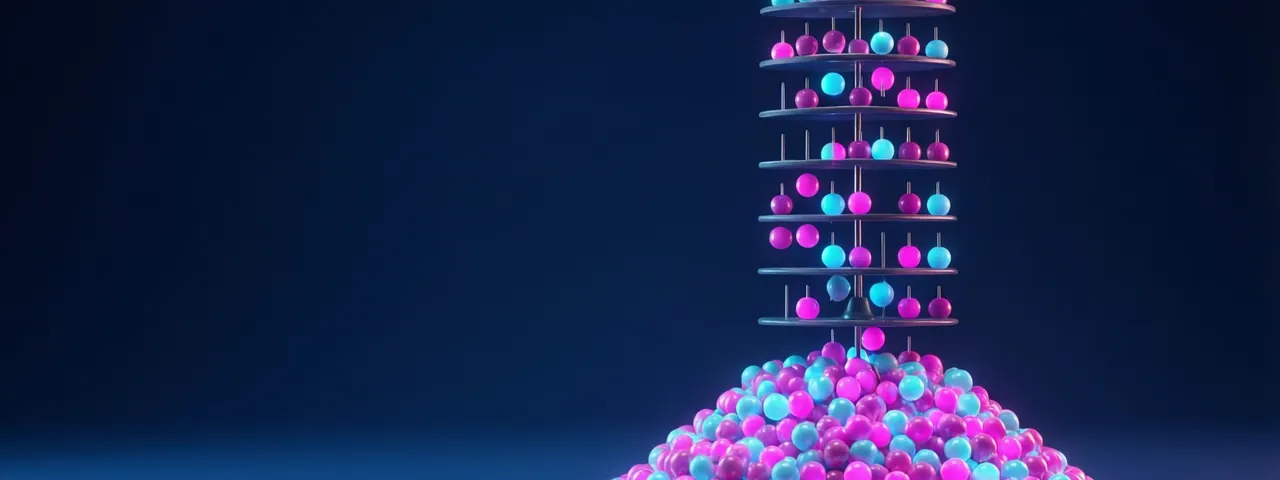
World 4 · Probability & Distributions
PROChance, dice and the bell curve- 01Sample space & eventsListing what can happen · 6 minPRO
- 02Combining probabilitiesAnd, or, complement · 7 minPRO
- 03The two-dice sumWhy 7 is special · 7 minPRO
- 04Random variablesNumbers from chance · 7 minPRO
- 05Expected valueThe long-run average · 7 minPRO
- 06Variance & spreadHow wide is the distribution? · 7 minPRO
- 07The binomial distributionCounting successes · 8 minPRO
- 08The Poisson distributionRare events over time · 7 minPRO
- 09The normal distributionThe bell curve · 8 minPRO
- 10Monte-Carlo simulationEstimating by random trials · 7 minPRO
- 11Law of large numbersAverages settle down · 6 minPRO
- 12The Central Limit TheoremWhy the bell is everywhere · 8 minPRO
- 13Checkpoint — probabilityChance, mastered · 6 minPRO
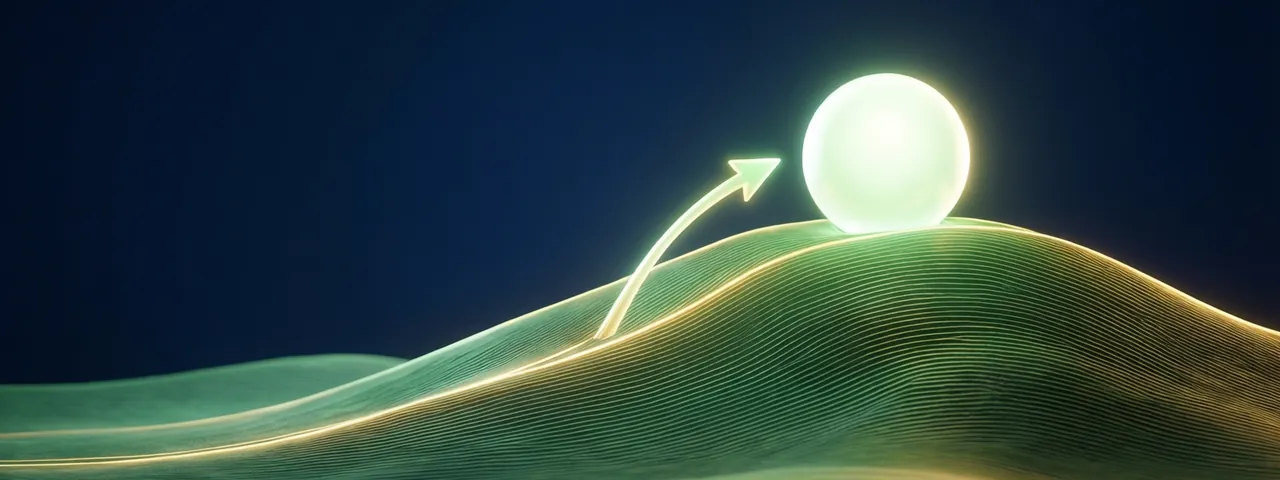
World 5 · The shape of change
PRORead a landscape, then find its steepest path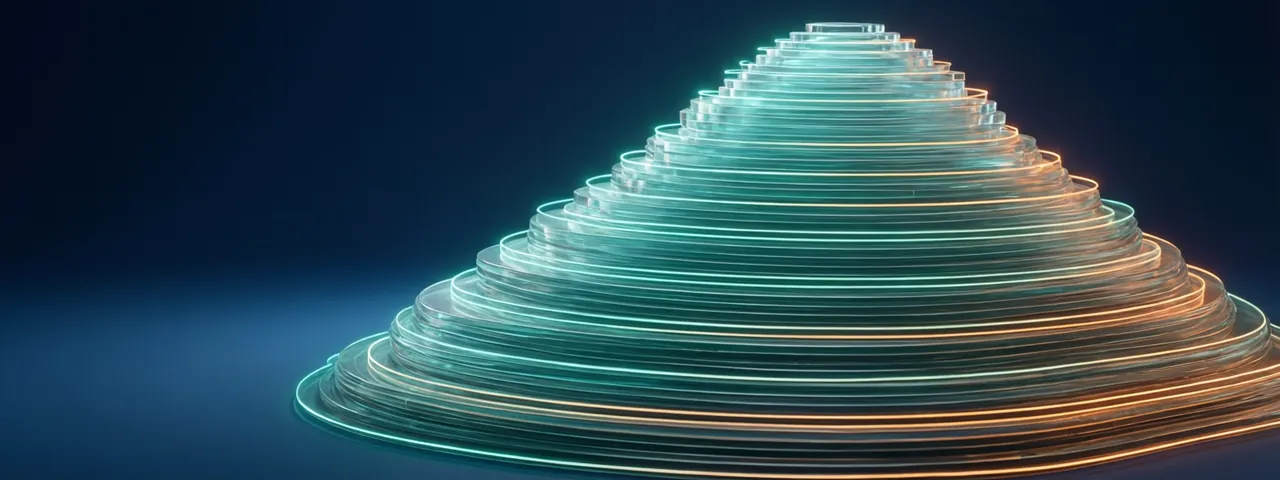
World 6 · From contour map to terrain
PROReshape a hill and read the map it leaves
World 7 · Unit circle to sine wave
PROTurn an angle, unroll it, and watch sine and cosine appearRead first
All guides →Guides for Calculus & Probability
 Explainer
Codes & Ciphers LabClassic Ciphers: Caesar, ROT13, Atbash and AffineHow the Caesar, ROT13, Atbash, affine and keyword ciphers work, how to crack them by counting letters, and why none of them is secure today.
 Explainer
Shape LabPlace Value, Fractions, Nets and Euler's FormulaSee how blocks show place value, how fractions are fair shares, how nets fold into solids and why faces minus edges plus vertices always equals 2.
 Explainer
Vector LabVectors Explained: Sum, Dot Product, Cross ProductLearn how vectors add tip to tail, how the dot product detects right angles, what the cross product points to, and how projection casts a shadow.