
AP Physics 1 Forces and Motion: A Free Study Guide
Map the forces and motion topics of an introductory physics course to free interactive lessons, with a four-week study plan and tips for the practice exams.
Most students do not struggle in introductory physics because the maths is hard. They struggle because the ideas stay abstract until they have seen a falling object, a launched ball or a balanced lever behave in front of them. This guide maps the topics commonly covered in a first algebra-based physics course onto free interactive lessons, then gives you a study plan you can adapt.
What an intro physics exam tends to ask
Courses such as AP Physics 1 usually build around a small set of big ideas, and the same ones come back in different clothes. Topics commonly covered include:
- Kinematics: describing motion with position, velocity and acceleration, including free fall and projectiles.
- Forces and Newton's laws: free-body diagrams, net force, friction, tension and normal force.
- Energy and momentum: conservation, work, collisions.
- Rotation and torque: levers, balance and rotational motion.
- Gravitation and circular motion: orbits and centripetal force.
- Oscillations and fluids, which recent versions of the course include.
Check your own syllabus for the exact list. Exam boards change the details, and this site does not know which version you are sitting. What does not change is the style: you are asked to explain, predict and justify, not just to plug numbers into a formula.
AP is a registered trademark of the College Board, which is not affiliated with Novareka.
Kinematics: see the motion before you write the equation
Kinematics questions are won by being clear about which quantity is which. Position, velocity and acceleration are three different things, and mixing them up is the most common source of lost marks.
Three habits help:
- Choose a positive direction and keep it for the whole problem.
- List what you know and what you want before choosing an equation.
- Ask whether the answer makes sense: if up is positive, a ball thrown upward has the same negative acceleration all the way through, even at the top.
The free lessons Free Fall and Velocity Over Time let you watch an object accelerate and see how the speed changes second by second. Pair that with How Far It Falls to check the pattern d = ½gt² against what the simulation actually does.
Projectiles: two independent motions
A projectile problem looks scary and is actually two easy problems running at once. Horizontally, with air resistance ignored, the velocity stays constant. Vertically, the object accelerates downward at g. The only thing linking them is time.
That is the idea behind two classic results: a ball launched horizontally lands at the same moment as one dropped from the same height, and a heavier object does not fall faster than a lighter one when air resistance is negligible. Horizontal Launch, Projectile Range and Mass Doesn’t Matter test exactly these claims.
Vectors make it easier
Splitting a launch velocity into a horizontal and a vertical part is a vector skill, not a physics skill. If it feels shaky, spend ten minutes with Tip to tail first.
Forces, levers and torque
Newton's second law, F = ma, is only useful when you know which forces to add. Draw the free-body diagram first, one arrow per force, and the algebra follows. Typical mistakes are inventing a force that has no source (an "impetus" pushing an object along) and forgetting that the normal force is not always equal to the weight.
Torque is the rotational version of the same story: a force matters more the farther from the pivot it acts. A balanced lever has equal turning effects on both sides, which you can write as force times distance on each side. The lab lesson Balancing Act lets you move loads along a beam until it levels, which is a quick way to feel why distance counts.
Gravitation and circular motion
Circular motion questions hinge on one idea: an object moving in a circle needs a net force pointing toward the centre. That force is not a new kind of force. It is whatever is already there, such as tension, friction or gravity, doing the pointing.
An orbit is the cleanest example. Gravity alone supplies the inward force, so the speed of a circular orbit follows from v = √(GM / r). In Circular orbit speed you can change the radius and see how the required speed changes.
Remember that this site's simulations are simplified teaching models. They leave out air drag and other real-world complications on purpose, so use them to build intuition and then check the details in your textbook.
A four-week study plan
Adjust the timing to your calendar, but keep the order.
- Week 1, motion: kinematics lessons, then draw velocity-time graphs from memory.
- Week 2, forces: free-body diagrams for ten situations, then the lever lessons.
- Week 3, projectiles and circular motion: launch lessons, the orbit lesson, and vector splitting.
- Week 4, mixed practice: timed sets, with every wrong answer turned into a one-line rule.
Using the practice exams
Each lab has its own practice exam, for example the Forces & Motion practice exam. Take one cold, mark it honestly, then go back to the matching lesson for every miss. A practice exam is a diagnostic first and a score second.
How to explore this in the lab
Work through these in order. Each lesson is complete only when you reach the goal in the simulation.
- Free Fall and How Far It Falls for acceleration.
- Horizontal Launch and Projectile Range for two-part motion.
- Balancing Act for torque.
- Circular orbit speed for gravity and circular motion.
When you can predict the outcome before pressing play, you are ready to move on.
- Keep position, velocity and acceleration separate, and pick one positive direction.
- Projectile motion is constant horizontal velocity plus constant vertical acceleration.
- Draw the free-body diagram before touching F = ma.
- Use practice exams as diagnostics, then fix each miss with a lesson.
Free Fall
How gravity speeds a falling ball. About 5 minutes. Free, no account, runs in your browser.
More free lessons from this guide
Simulations on Novareka are teaching models, simplified on purpose. They show how an idea behaves; they are not a substitute for professional, medical or engineering advice.
Labs in this guide
 Live
Live Live
Live Live
Live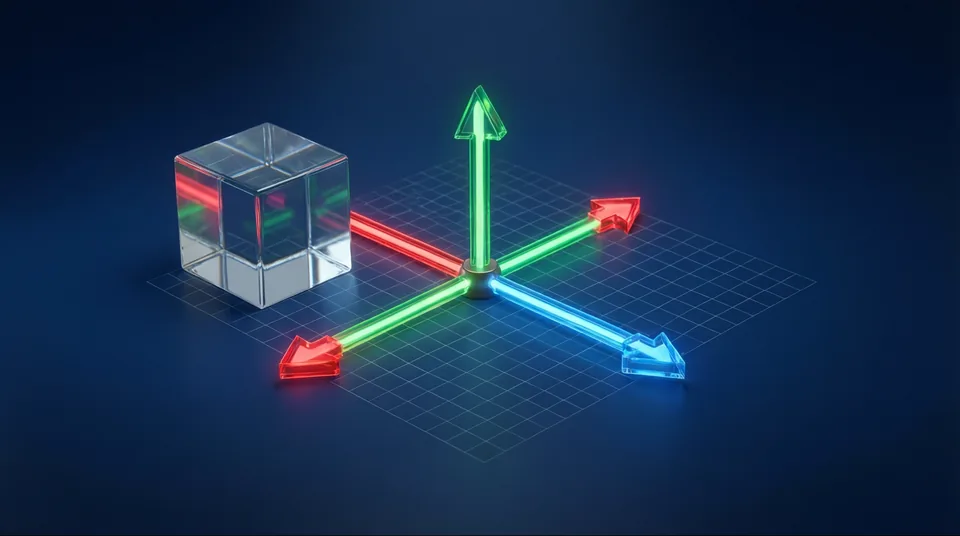 Live
LiveKeep reading
All guides → Explainer
 Explainer
 Explainer