 World 1 · Atoms & Bonds · 7 min
Inside the atom
Protons, neutrons, electrons
Teaching this? Open projector mode
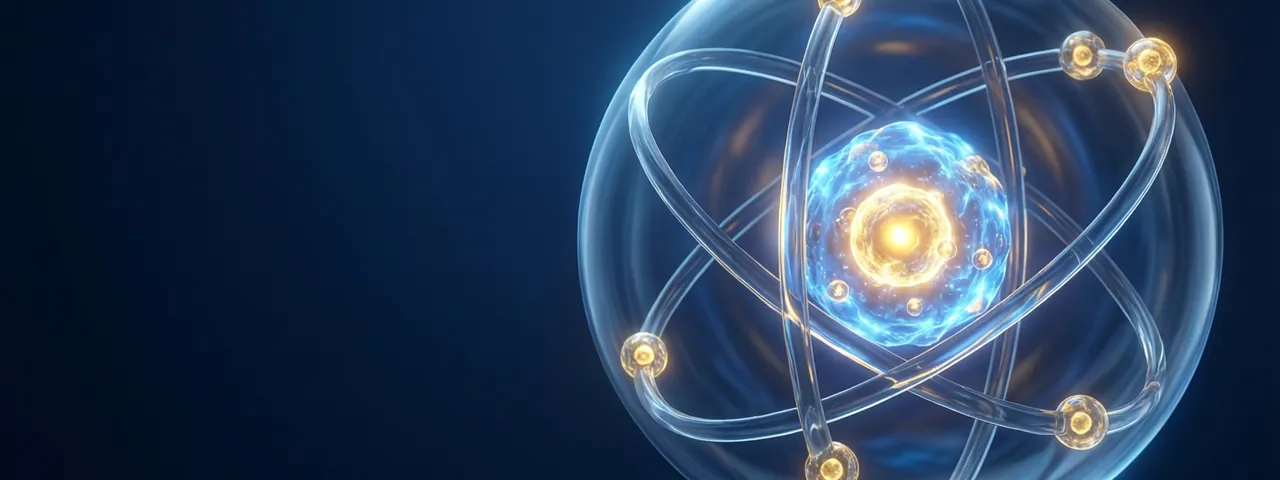
An atom has a dense central nucleus made of protons (positive charge) and neutrons (no charge), surrounded by a cloud of fast-moving electrons (negative charge). The atom is mostly empty space — if the nucleus were a marble, the nearest electron would be streets away.
The number of protons is the atom’s fingerprint — its atomic number — and it decides which element it is. 1 proton is always hydrogen; 6 protons is always carbon. Change the proton count and you change the element entirely.
A neutral atom has equal numbers of protons and electrons, so the charges cancel. Add or remove electrons and the atom becomes a charged ion. Change the neutrons and you get a heavier or lighter isotope of the same element.
What determines which element an atom is?