Chemistry · University
Organic Chemistry
Rotate, flip and react 54 molecules in 3D — stereo, conformations, SN1/SN2.
The course
8 worlds · 49 lessons
World 1 · Structure & Bonding
FREEWhy carbon builds everything- 01Why carbonFour bonds, and chains that never end · 6 min
- 02sp³, sp² and spShape follows from how many things are attached · 8 min
- 03Skeletal structuresThe drawing chemists actually use · 6 min
- 04Functional groupsThe parts that react · 7 min
- 05Polarity and forcesWhy some things dissolve and some things boil · 6 min
- 06Acids and basespKa, and what makes an anion comfortable · 8 min
World 2 · Naming & Conformation
PRONames, Newman projections and the chair- 01Naming alkanesLongest chain, lowest locants · 8 minPRO
- 02Naming with functional groupsThe suffix takes priority over everything · 8 minPRO
- 03Newman projectionsLooking straight down a bond · 7 minPRO
- 04Butane: gauche and antiNow the groups are big enough to matter · 8 minPRO
- 05Ring strainWhy three is agony and six is free · 7 minPRO
- 06The cyclohexane chairAxial, equatorial, and the flip · 9 minPRO
- 07A-values and the locked ringHow much a group hates being axial · 8 minPRO
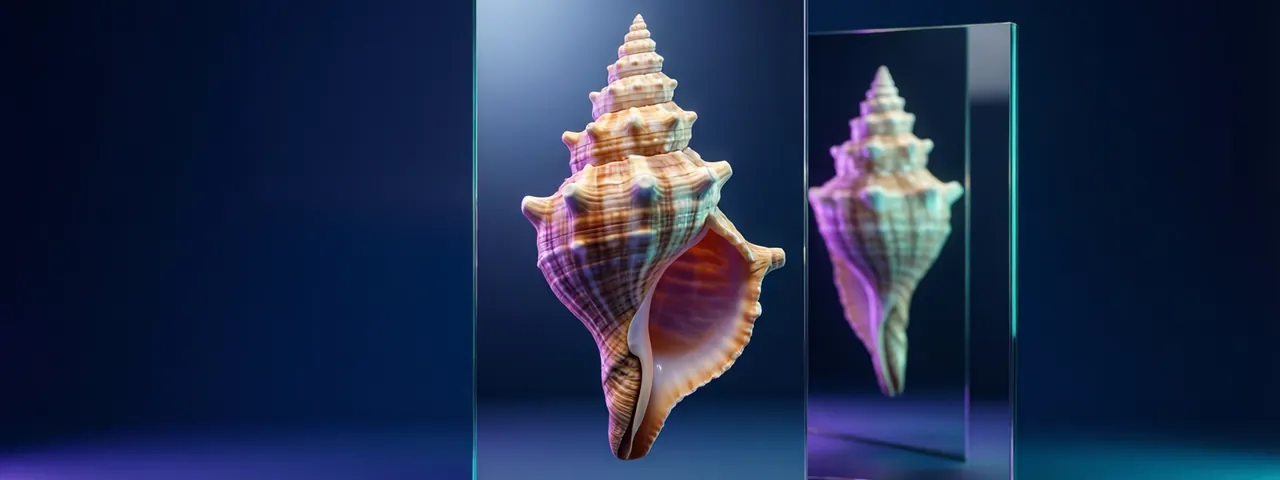
World 3 · Stereochemistry
PROHandedness, and why it decides everything- 01ChiralityYour hands are the same molecule, twice · 7 minPRO
- 02CIP prioritiesRanking the four groups · 9 minPRO
- 03R and SPoint the lowest away and read the circle · 9 minPRO
- 04Optical activityThe measurement R/S cannot predict · 7 minPRO
- 05Two centres, four moleculesEnantiomers and diastereomers · 8 minPRO
- 06Meso compoundsStereocentres that cancel out · 7 minPRO
- 07E and ZStereochemistry without a stereocentre · 7 minPRO
World 4 · Substitution & Elimination
PROSN1, SN2, E1, E2 — and which one wins- 01Leaving groupsA good leaving group is a weak base · 7 minPRO
- 02Nucleophile or base?The same species, two different jobs · 8 minPRO
- 03SN2One step, backside, inversion · 9 minPRO
- 04SN1Two steps, a flat cation, and a racemic product · 9 minPRO
- 05E2Anti-periplanar, or nothing happens · 9 minPRO
- 06E1 and the competitionPutting all four on one grid · 10 minPRO
- 07Solvent effectsThe flask is a reagent too · 7 minPRO
World 5 · Alkenes & Alkynes
PROAdding across a π bond- 01Alkene stabilityMore substituted is more stable · 7 minPRO
- 02Markovnikov additionThe H goes where the H already is · 8 minPRO
- 03Anti-MarkovnikovTwo ways to put the group on the other carbon · 8 minPRO
- 04HalogenationThe bromonium ion, and why addition is anti · 8 minPRO
- 05Syn additionsWhen both groups arrive from one face · 7 minPRO
- 06Oxidation and cleavageBreaking the bond to find out where it was · 7 minPRO
- 07AlkynesTwo π bonds, and an unusually acidic H · 7 minPRO
World 6 · Aromatics, Carbonyls & Spectra
PRORings, C=O, and reading a structure off a spectrum- 01AromaticityFour conditions, and Hückel's number · 8 minPRO
- 02Electrophilic aromatic substitutionWhy the ring substitutes instead of adding · 8 minPRO
- 03Directing effectsAnd the halogens, which break the slogan · 9 minPRO
- 04The carbonyl groupOne polarised bond, half the subject · 8 minPRO
- 05IR spectroscopyFinding the functional group in one look · 8 minPRO
- 06¹H NMRHow many, how many neighbours, and where · 10 minPRO
- 07Structure elucidationFormula in, structure out · 10 minPRO
World 7 · Follow the electron pairs
PROConcerted and stepwise substitution and elimination
World 8 · Watch molecules vibrate: IR spectroscopy
PRONormal modes, the dipole rule, isotopes and the carbonyl bandRead first
All guides →Guides for Organic Chemistry
 Exam prep
Chemistry LabAP Chemistry Bonding and Structure: A Free Study GuideConnect atomic structure, ionic and covalent bonds, molecular shape and polarity to free interactive lessons, with a study plan and practice exam advice.
 Explainer
Chemistry LabAtoms, Bonds and Molecular Shapes (VSEPR) ExplainedHow protons, electrons and valence shells lead to ionic and covalent bonds, and how VSEPR predicts the 3D shape of water, ammonia and carbon dioxide.
 Explainer
Organic ChemistryOrganic Chemistry Basics: Hybridisation and Functional GroupsWhy carbon forms so many compounds, how sp3, sp2 and sp hybridisation set molecular shape, and how functional groups predict reactions. Beginner friendly.