 World 1 · Cells & Tissues · 6 min
The cell
The smallest unit of life
Teaching this? Open projector mode
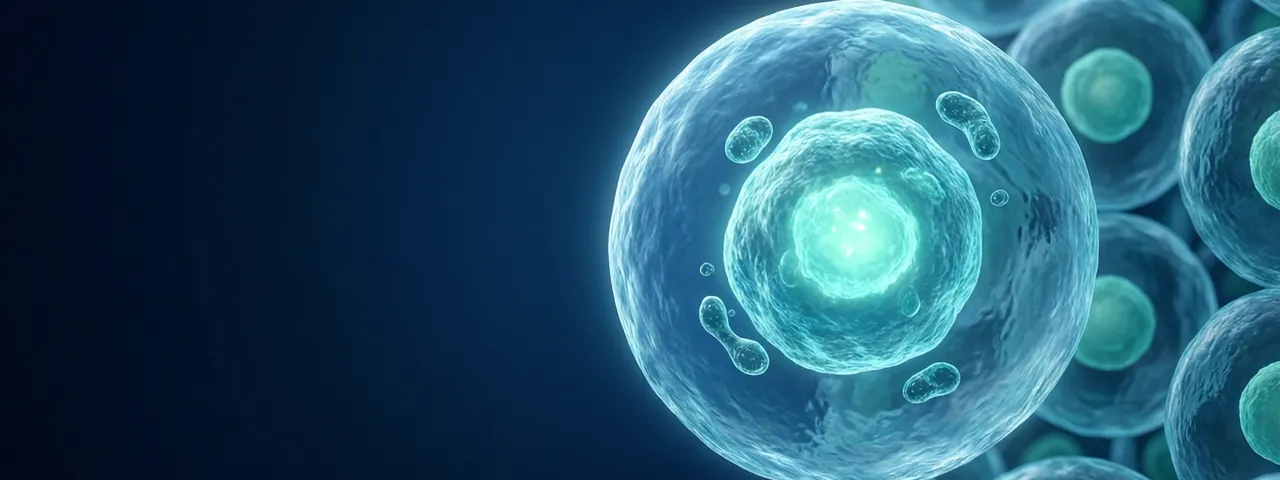
The cell is the smallest living unit of the body — the basic unit that all human structure and function is built from. An adult body is made of somewhere around 30 to 37 trillion of them, each one a tiny, self-contained factory doing a specific job. Every cell is wrapped in a cell membrane, a thin, flexible barrier made mostly of fat molecules that separates the cell’s contents from the fluid around it and controls, with great precision, what is allowed to enter and what is allowed to leave.
Cells are not identical copies of one another. During development, cells specialise — they take on a distinct shape and job suited to one task. A muscle cell is long and packed with filaments built to shorten. A nerve cell stretches out into a thin fibre built to carry an electrical signal over distance. A red blood cell is shaped like a flattened disc, with no nucleus at all, built purely to carry oxygen. Despite this huge variety of shapes, nearly every cell in the body shares the same basic internal parts, just used in different proportions.
What controls what enters and leaves a cell?
Roughly how many cells make up the adult human body?