 World 1 · Cells & Tissues · 7 min
Inside the cell
Organelles and their jobs
Teaching this? Open projector mode
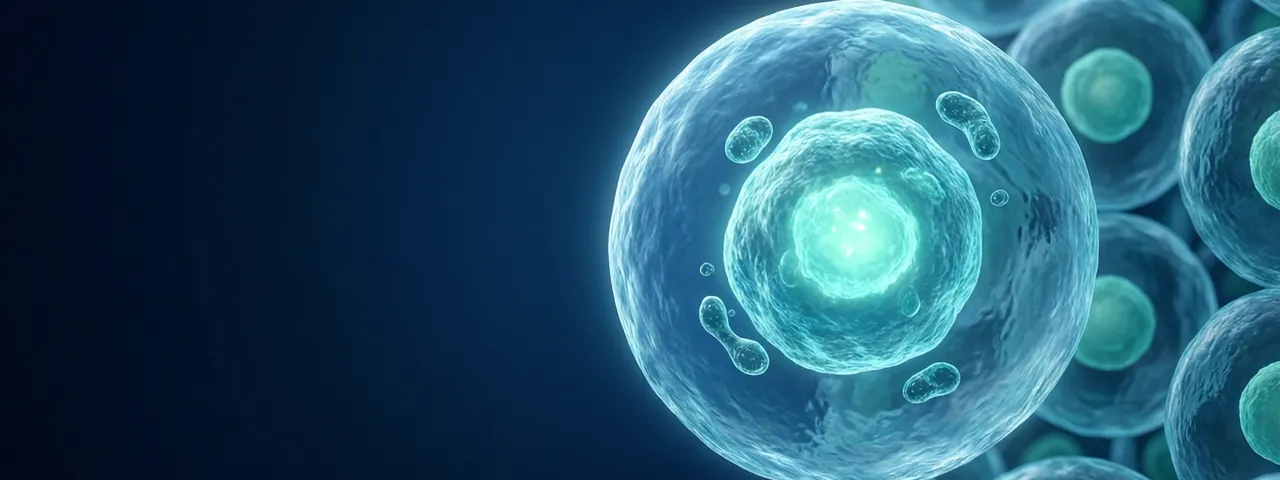
Inside the membrane, a cell is not an empty bag of fluid — it is packed with tiny working structures called organelles, each with a specific job, the way organs are specialised structures inside the body. Organelles float in a jelly-like cytosol; the cytosol and organelles outside the nucleus together form the cytoplasm, which fills the space between the membrane and the control centre.
- Nucleus — the control centre, holding the cell’s DNA, the instruction manual for everything the cell does.
- Mitochondria — release usable energy from nutrients; a busy cell like a muscle cell can contain thousands of them.
- Ribosomes — read genetic instructions and build proteins, the workhorse molecules of the cell.
- Endoplasmic reticulum — a folded network of membranes that helps fold, process, and transport those newly made proteins.
- Golgi apparatus — packages finished proteins into small parcels and ships them to where they’re needed, inside or outside the cell.
Every one of these organelles depends on the others. DNA in the nucleus holds the instructions; ribosomes read them to build proteins; the endoplasmic reticulum and Golgi apparatus finish and route those proteins; and mitochondria supply the energy the whole process runs on. A cell is less like a single machine and more like a small, coordinated factory floor.
Which organelle holds most of a typical human cell’s DNA?
Which organelle builds proteins by reading genetic instructions?