 World 2 · Skeletal System · 7 min
Bone as living tissue
Structure, growth, and minerals
Teaching this? Open projector mode
It is easy to picture bone as dead, dry material — like the bones you see in a museum display. In a living body, bone is the opposite: it is a living connective tissue, full of blood vessels and living cells, that is constantly being broken down and rebuilt throughout your life. Specialised cells called osteoblasts build new bone, while other cells called osteoclasts break old bone down, and the two stay in balance to keep bone strong and appropriately shaped for the loads it carries.
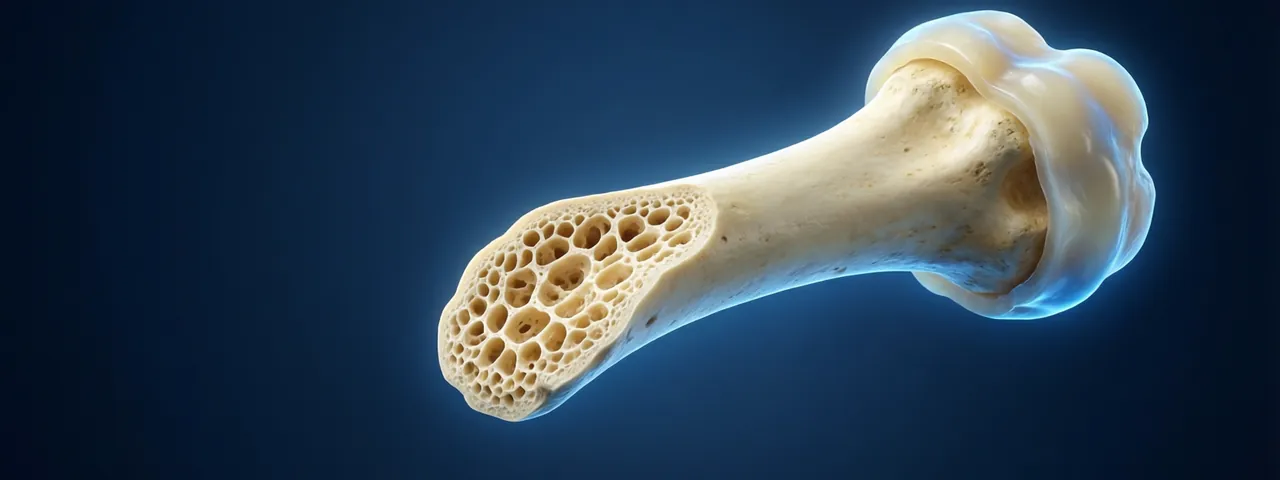
A cross-section of a bone reveals two distinct kinds of bone tissue. A dense, solid compact bone forms the hard outer shell, giving the bone its strength. Inside that shell, especially near the ends of long bones, sits a lighter, honeycomb-like spongy bone, whose open structure keeps the bone light without sacrificing much strength — a design principle similar to how a lightweight beam can be just as strong as a solid one.
Bone also serves as the body’s main mineral bank. It stores roughly 99% of the body’s calcium, along with phosphorus, and can release these minerals into the blood when the body needs them elsewhere — for example, to help muscles and nerves function correctly. Deep inside many bones, in a soft tissue called bone marrow, the body also manufactures new blood cells continuously, including the red blood cells that carry oxygen.
What makes up the strong outer shell of a bone?
Bone stores most of the body’s supply of which mineral?